On this page
Pay on delivery loses money quietly. The rider’s fare is paid, the stock spends two days on a motorbike, and the customer who ordered “by mistake” buys from someone else next week. None of it shows on the sales report, because the sale never happened.
You may not be able to drop pay on delivery. Many buyers in Kenya will not pay a shop they have never used before the goods arrive. You can stop it eating your margin with five controls. Confirm, ask for money upfront where risk is high, collect on your own till, reconcile riders daily and track every return.
Count what one failed delivery costs
Here is an illustrative example with round numbers. A KSh 2,000 order carries a margin of KSh 500. The rider costs KSh 300 out and KSh 300 back, and packing costs KSh 50.
One failed delivery costs KSh 650, more than the margin on that order. Each failure wipes out the profit on more than one successful order. The stock also sits unavailable for days while another buyer may want it.
Then add the staff time. Someone calls the customer, rebooks the rider, unpacks the parcel and checks it back in. None of that hour appears against the order.
Run this sum with your own fares and margins. The result usually changes how strict an owner is willing to be.
Confirm the order before it leaves
Most failed deliveries were doubtful before dispatch. The phone was off, the address was a guess or the customer had already bought elsewhere.
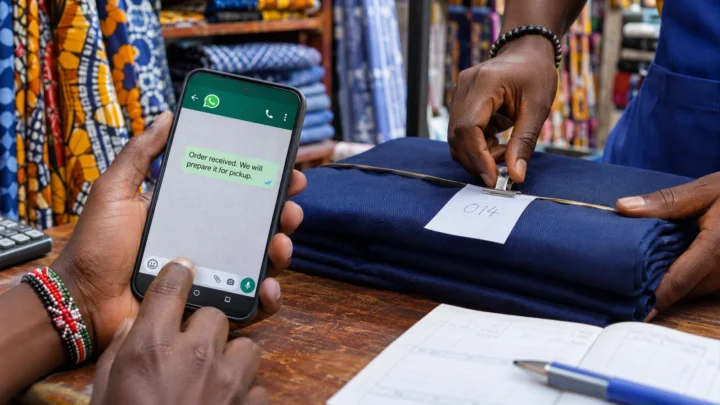
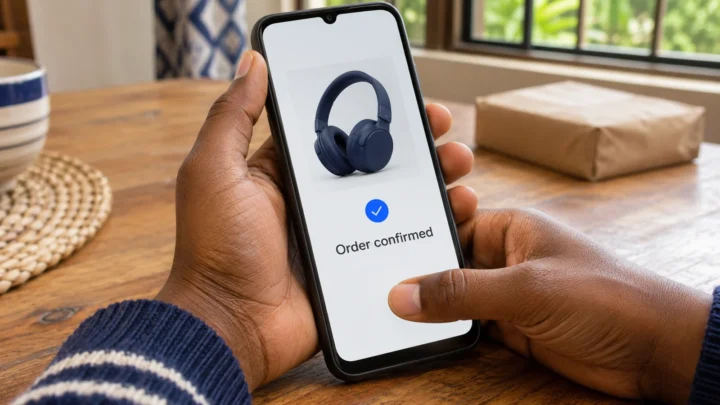
Confirm every pay-on-delivery order before it is packed. A short WhatsApp message or call should check five things:
- The items and the total, including delivery.
- A delivery location with a landmark, not only an estate name.
- A time window the customer will be there.
- How they will pay at the door: M-PESA, card or cash.
- A second phone number, for orders above your chosen value.
Hold any order you cannot confirm after two attempts. Tell the customer it is held, and release the stock after a set time. If orders come in on WhatsApp, our guide to WhatsApp orders covers numbering each one.
Ask for money upfront where risk is high
Not every order carries the same risk. Set a rule, write it on the checkout page and apply it to every customer the same way.
| Signal | What to ask for |
|---|---|
| First order above a set value | A deposit, or full payment before dispatch |
| Delivery outside your usual zones | The delivery fee upfront, at least |
| A custom or made-to-order item | A deposit before work starts |
| A previous refusal on the same phone number | Full payment before dispatch |
| Several orders from one number in a day | A call before any of them ships |
A deposit equal to the delivery fee covers the trip if the customer refuses. Send it as an STK push tied to the order number, so the payment matches itself.
Give buyers a reason to pay first, too. Free delivery or a small discount on prepaid orders moves some customers off pay on delivery. Every order paid upfront is a trip that cannot fail on payment.
Say all of this at checkout, never at the door. A buyer told about a deposit before ordering can decide. A buyer surprised by one on the phone cancels.
Collect at the door on your own till
The riskiest moment is the money changing hands. Cash in a rider’s pocket, or M-PESA sent to a rider’s own number, reaches your books only when the rider says so.
Collect every door payment to your own till or paybill:
- The rider triggers an STK push to the customer’s phone from a delivery app or link, with the order number as the reference.
- The customer enters their PIN at the door.
- The rider’s screen shows the order as paid once Safaricom confirms it, and only then is the parcel handed over.
That one change removes most rider disputes, because the payment never passes through the rider. Our M-PESA integration guide explains why a paybill or till with an account reference makes matching possible.
Where cash is unavoidable, record it against the order at the door. Each rider then carries a running cash balance until it is handed in.
Reconcile every rider every day
A gap found the same evening is a conversation. A gap found at month end is an argument with no evidence.
Give every order that leaves the shop a status by close of day:
| Status | What must exist |
|---|---|
| Delivered and paid | A payment receipt or a cash entry against the order |
| Delivered, payment pending | A named person following up, with a date |
| Failed, customer unreachable | The time of each attempt |
| Refused at the door | The reason the customer gave |
| Returned to the shop | The stock checked and counted back in |
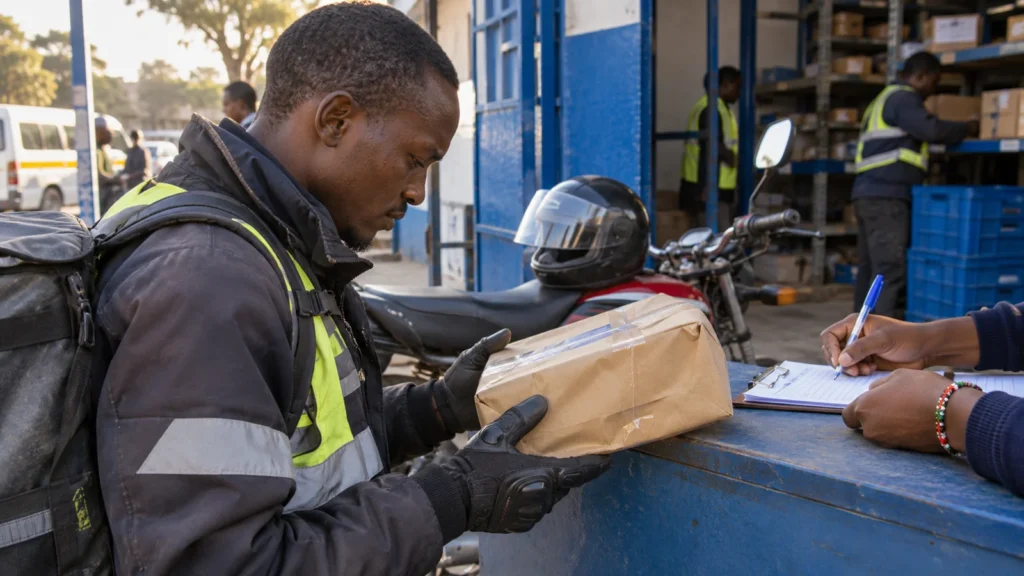
Match each M-PESA or card receipt to its order, and each rider’s cash to the cash recorded. Note any gap with the rider before they leave. A rider whose balance is clear every evening has nothing to defend.
Keep these statuses in your order system, not in a notebook or a rider’s WhatsApp. The person who picks up a failed order tomorrow needs to see what happened today.
Track every return and refusal
A refusal is information. Record a reason for every failed delivery, from a short fixed list:
- customer unreachable
- refused at the door
- wrong or incomplete address
- wrong or damaged item
- customer cancelled after dispatch
- rider did not reach the customer
Check returned stock the same day and put it back in the stock count. A parcel left unopened in a corner for a week is stock you cannot sell.
Refund deposits and prepaid orders through a recorded process, with a second person approving each payout. If the order had an eTIMS invoice, the refund needs a credit note against it, as covered in eTIMS for online shops.
Watch five numbers every week
| Number | What it tells you |
|---|---|
| Failed deliveries as a share of dispatched orders | Whether confirmation is working |
| Refusal rate, pay on delivery against prepaid | What pay on delivery costs you |
| Uncollected cash per rider | Where the money is waiting |
| Days from a failed delivery to stock back on sale | How long returns tie up stock |
| Share of orders confirmed before dispatch | Whether the team follows the rule |
Break each number down by rider and by delivery area. The worst rider and the worst area usually account for most of the losses. Fix those two before you change anything else.
Your next step
Pull last month’s dispatched orders and count the failed deliveries, with a reason for each one. Multiply the count by your cost per failed trip. That figure is what pay on delivery cost you last month.
Our payments service builds STK push collection at the door, matching of every payment to its order and refund payouts with approvals.
Need it built properly? A free 30-minute call with an engineer, then one fixed price in writing.
Book a free call